Introduction
It's late November when you finally leave the office. The cold air cuts through you immediately, and your regular jacket suddenly feels inadequate. You realize it's time to get serious about winter gear. Standing in front of your wardrobe, you're torn between a parka, a down jacket, or a traditional coat. The decision isn't easy.
It's easy to get confused. You'll see these three words used constantly, and often treated as if they mean the same thing. The problem: you might buy outerwear that simply doesn't work for your climate. Picture a feather-light down coat in heavy rain. Or bundling up in an oversized parka just to walk through an indoor mall. Or wearing a sleek jacket that leaves you shivering in freezing weather.

At Firoth, we understand that effective thermal protection is essential for maintaining your activity level across all weather conditions. Leveraging our knowledge of heated apparel and temperature regulation, this guide breaks down the functional distinctions between three core clothing categories. You'll gain clarity on selecting the right option for your specific environment, and discover how heating technology can elevate your comfort so weather never limits your lifestyle again.
The essential features of the down jacket
What is a down jacket, and how does its insulation work?
Down jackets function through a straightforward design principle: the capture and retention of air. The quilted structure features stitched sections that contain filling material—either natural down or synthetic fibers—forming isolated air pockets. These trapped air layers serve as an effective thermal barrier, insulating your body from external cold.
The principle mirrors double-glazed windows precisely: insulation stems not from the glass itself, but from the air gap separating the two panes. Greater loft depth means more trapped air, which enhances thermal resistance.

The obstacle: while down jackets perform brilliantly in arid, frigid conditions, their quilted construction provides minimal protection against moisture and gusty winds.
The answer: when combined with a windproof outer layer or integrated heating technology, it transforms into a powerful defense against harsh sub-zero conditions
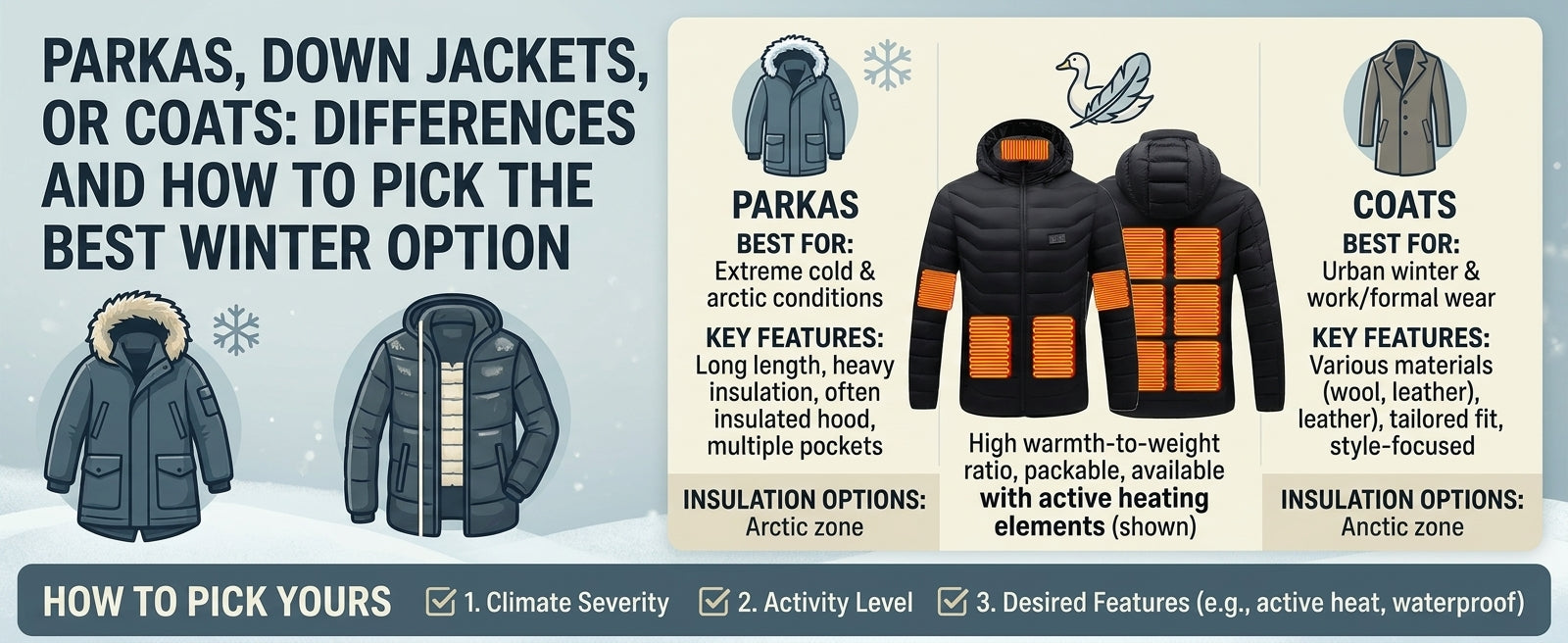
That's precisely the engineering philosophy of our Extra-Warm Down Jacket: it merges cutting-edge fabric insulation technology with strategically positioned heating elements across the upper back, front torso, and lumbar region. The outcome: maximum warmth retention even as temperatures plunge below freezing, eliminating the need for excessive layering underneath.
Natural vs. synthetic down jacket: how does it affect your warmth?
Selecting between a natural down jacket and a synthetic-fill jacket fundamentally shapes your comfort and the environments where you can perform effectively.
Natural down (goose or duck): Delivers exceptional warmth without excess weight. Compresses remarkably well for packability. Perfect for alpine conditions and trekking in dry climates. The trade-off: performance drops significantly—by roughly 80%—if the material becomes saturated with moisture.
Synthetic fill: It weighs more than comparable insulators while maintaining its thermal performance in wet environments. Low maintenance and quick-drying characteristics make it ideal for daily wear or unpredictable weather.

Rather than asking "which one is better?" consider instead "what environment will I be wearing it in?" Down insulation dominates in dry, extremely cold climates. Synthetic insulation delivers better performance in damp settings or for everyday city wear.
Taking this further, the Firoth Heated Hooded Jacket resolves the challenge entirely. Its water-resistant synthetic insulation maintains performance during rainfall, while embedded carbon filaments deliver consistent warmth without the bulk or vulnerability associated with traditional down filling.
Lightweight and packable: the jacket’s mobility advantages
The jacket's defining advantage lies in its remarkably light construction. Several versions tip the scales below 300 grams and compress neatly into an integrated pocket. Toss it in your bag when you leave home, then unfold it whenever temperatures take a turn.
Its compact design makes it ideal for pursuits demanding mobility and flexibility: athletics, biking, backcountry skiing, or your daily office commute. The weight barely registers on your shoulders. Movement remains unrestricted.
Our Firoth Down Jacket elevates the design further: crafted for minimal weight and maximum flexibility, it incorporates an innovative heating system you control precisely when temperatures drop. You get the convenient packability of traditional down, enhanced with warmth at your command.
The parka: your shield against the elements
Construction and waterproofing: why the parka withstands rain better
Built with one purpose at its core: shielding you from the most unforgiving weather. Born from Inuit innovation and refined through military use, the parka stands as the toughest outerwear choice in your collection.
A parka's construction is fundamentally different from a traditional down jacket. The outer shell typically uses nylon or polyester with a water-repellent coating, and many feature an integrated waterproof membrane. Seams are usually heat-sealed to block water penetration. Premium parkas achieve a waterproof rating of 10,000 mm water column—far exceeding standard down jackets, which offer only light rain protection.

Down jacket: offers brief protection against light rain and drizzle.
Parka: engineered to handle extended rainfall, snow, and intense wet weather.
Classic coat: water resistance depends on material composition and is typically not fully waterproof.
Our Heated Softshell Jacket fully satisfies waterproofing standards with its water-resistant and wind-blocking membrane paired with a detachable hood, keeping you shielded from harsh weather while providing customizable warmth in four key regions: neck, back, and both pockets. You get the durability of a performance parka combined with the advantage of built-in heating technology.
Length and hood: full-body protection
Parkas are designed with extended length, typically extending to the mid-thigh or beyond. This is by design, not accident. The extended cut shields your lower back and upper thighs—critical zones where heat dissipates quickly when exposed to wind.
An integrated hood, often finished with fur trim (genuine or faux) or a detachable panel, forms a sheltering passage that shields against wind and snow. It functions as a thermal barrier, retaining warmth across the face and neck area.

A short down jacket may leave your legs uncovered, but a parka delivers full-body protection. It shields your entire torso and extends down to cover a portion of your legs.
Pockets and features: practicality in the field
Crafted for those who embrace the outdoors, parkas combine functionality with protection. They include flap pockets that shield against rain, interior compartments to safeguard valuables, and convenient access points for headphone cords and drawstring adjustments.
Cargo pockets: generous storage compartments perfect for carrying gloves, equipment, or personal devices.
Detachable liner: select styles include a removable internal down layer that lets you fine-tune warmth based on weather and activity.
Breathable design: underarm vents with zippered closures help manage body heat when you're moving.
Heated apparel transcends mere gadgetry—it serves as essential equipment. We're committed to removing weather as a barrier between you and your objectives.
The coat: blending urban elegance with thermal protection
The Different Types of Coats and Their Specific Uses
A "coat" is the broadest category among the three, encompassing any lengthy outer garment designed to be worn over clothing for warmth and protection from cold weather. This overarching classification includes numerous distinct styles and variations:
- The pea coat: Compact and refined, the pea coat features a double-breasted silhouette crafted from premium wool. An essential choice for urban settings when temperatures drop.
- The trench coat: a sleek, tailored rain jacket designed for transitional weather.
- The duffle coat: hhooded, featuring toggle closures, constructed from heavyweight material. Offers dependable defense against harsh winds.
- The overcoat: lengthy, refined, typically crafted from wool or cashmere. A question of personal elegance.
This coat isn't designed to rival a work parka on the job site or a technical down jacket in alpine conditions. Instead, it claims its own space: one defined by contemporary aesthetics and city-ready adaptability.
Materials and cuts: how to combine style and warmth
Premium winter coats are crafted from superior textiles including wool, cashmere, gabardine, and tweed. These fabrics deliver excellent thermal protection during cooler seasons while providing a refined tactile experience. The interior lining—typically constructed from satin, polyester, or flannel—enhances overall wearing comfort.
Coats feature a more tailored cut compared to parkas, creating a refined silhouette that flatters the body. This structured design works well for urban environments, professional settings, and city activities. However, the fitted nature of this cut can restrict your ability to layer additional technical garments underneath.
When facing harsh winter conditions, the key to staying warm in a coat is implementing a strategic layering approach: the right thermal base layers offset what the outer garment alone cannot provide.
The coat’s versatility: from the office to city outings
This coat truly excels in its intended setting: the rhythm of city living. Commutes by transit, professional workplaces, casual dining, and urban exploration. It integrates seamlessly into a refined aesthetic while delivering dependable warmth for mild winters.
This is the piece you choose when style is just as important as performance. Available in both men's and women's silhouettes across multiple lengths—short, mid, and long—plus an extensive range of shades and textures.
Weather resistance: drizzle, rain, snow
This is where the difference between a down jacket and a parka becomes clear. In real-world conditions:
-
Light drizzle: A down jacket performs adequately for short periods due to its water-repellent finish. A wool coat, however, tends to absorb moisture and gains weight quickly.
-
Heavy rain: Only a parka equipped with a waterproof membrane will keep you completely dry. Down jackets soak through and lose their thermal insulation properties.
-
Snow and wind: The parka is your best defence. Its extended length, sealed seams, and integrated hood work together to shield you from harsh weather conditions.
For those whose routines frequently involve wet or snowy conditions, a parka transcends being a mere indulgence. It becomes an essential instrument that enables uninterrupted performance.
Weight and bulk: how do they affect your mobility?
How much your garments weigh plays a crucial role in how freely you can move. When you're out hiking, cycling, or spending time in nature, each extra ounce matters.
- Down jacket: the master of minimal bulk. Ultra-lightweight versions feel almost weightless when worn. Its packable design collapses compactly for easy travel and storage.
- Parka: substantially heavier and more voluminous. Built for wearing throughout the day rather than packing away.
- Coat: moderate in heft, though its structured fabric can restrict movement and flexibility.
How to choose based on your activity conditions?
Dry cold and urban activities: when to choose a down jacket
Urban life means constant movement between your apartment, transit stops, and workplace. The weather turns harsh and frigid, yet precipitation remains scarce. These are the ideal conditions where a down jacket truly thrives.
Choose a down jacket when:
- Temperatures drop but remain above -10 °C.
- You want a lightweight garment that you can easily take off and store.
- You need mobility: cycling, walking, urban sports.
- You’re looking for a comfortable style for everyday life without added weight.
When facing harsh winter conditions in arid climates—whether backcountry skiing or alpine trekking—a premium down jacket is your ideal choice for superior warmth and performance.
Rain, snow, and harsh outdoor conditions: the parka’s advantage
Your work takes you outside. Whether you're on a construction site, at the waterfront, or on the playing field, you're exposed to the elements. Rain and wind come with the territory. A quality parka is your defense.
Choose a parka when:
- Waterproofing is non-negotiable: rain, snow, mixed conditions.
- You need functional pockets for your tools or equipment.
- You remain stationary for long periods outdoors.
- You face combined conditions: cold + wind + humidity.
Contemporary parka designs typically feature a detachable thermal lining paired with a weatherproof outer layer. This design allows you to customize your insulation based on seasonal changes and environmental demands.
Layering and thermoregulation: optimizing your multi-layer system
What separates seasoned professionals—from alpine guides to motorcycle riders to outdoor laborers—comes down to a single principle: intelligent layering.
Here is the optimal multi-layer system:
-
Base layer (skin-contact): Moisture-wicking thermal underwear designed to pull sweat away from your skin while preserving natural body warmth. Firoth's heated variants enhance this with intelligent temperature management technology.
-
Mid-layer (insulation): A lightweight down jacket or sleeveless quilted vest that traps heated air and creates an effective insulating barrier. This layer forms the foundation of your thermal protection system.
-
Outer layer (protection): A durable parka or weatherproof windbreaker that shields you from wind, precipitation, and snow while allowing breathability.
This solution delivers complete flexibility. Simply add or subtract layers based on environmental circumstances. Maintain your ideal comfort level without risk of overheating or chilling.
That's exactly where the Firoth Heated Sleeveless Jacket comes in: it's windproof, water-resistant, and features 5 strategic heating zones that work seamlessly as a mid-layer beneath any winter coat or jacket. Your current outerwear becomes an intelligent temperature-control solution—no wardrobe overhaul required.
Why choose Firoth for optimal thermal protection?
From down jackets to parkas to traditional coats, Firoth works alongside your existing layers—filling the gaps where standard apparel leaves you cold—by delivering dynamic, precision warmth that lets you stay active through any climate.
-
Strategic heat distribution: Embedded carbon fibers provide targeted warmth to key zones (back, chest, and limbs), eliminating the lag time as conventional materials gradually reach optimal temperature.
-
Extended runtime performance: Engineered with advanced battery technology from VoltR, our compact power cells deliver sustained heating for up to 8 hours across 3 customizable intensity settings, allowing you to adjust output based on your specific needs.
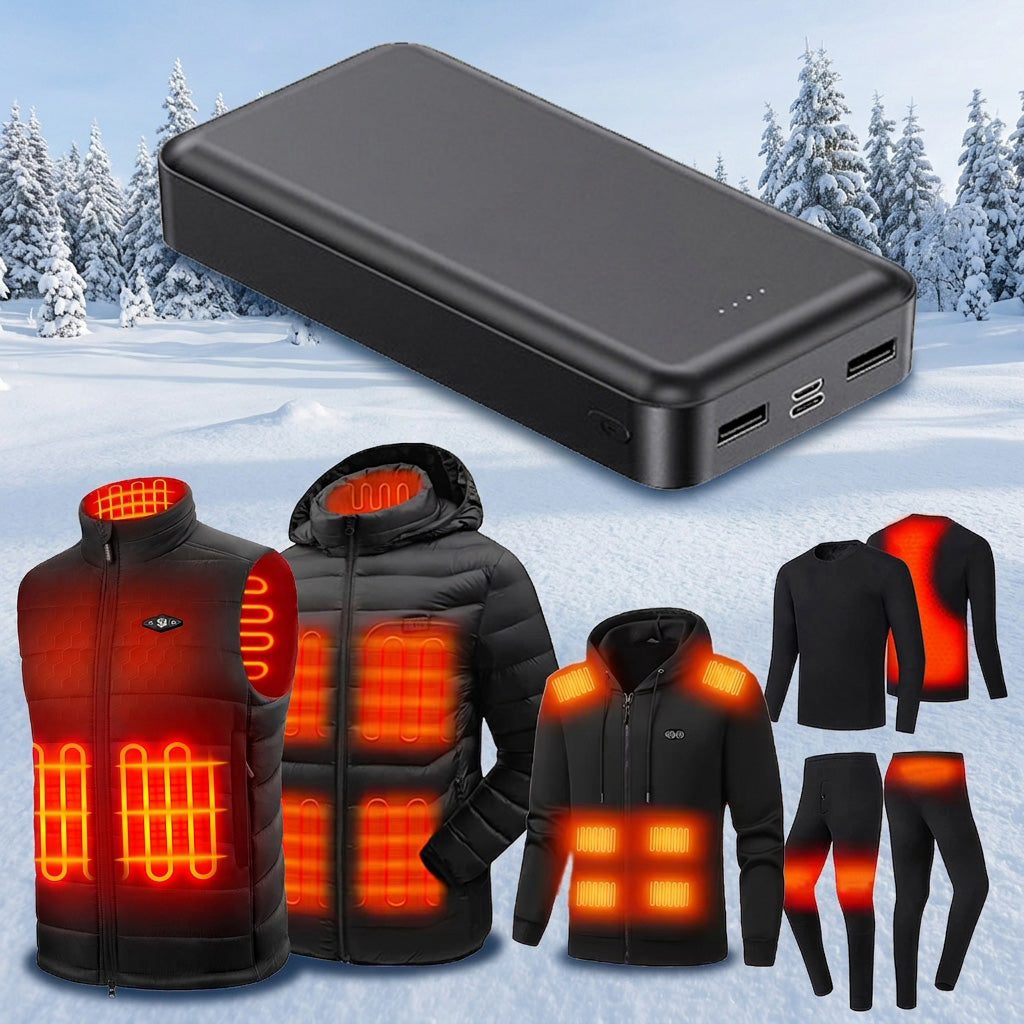
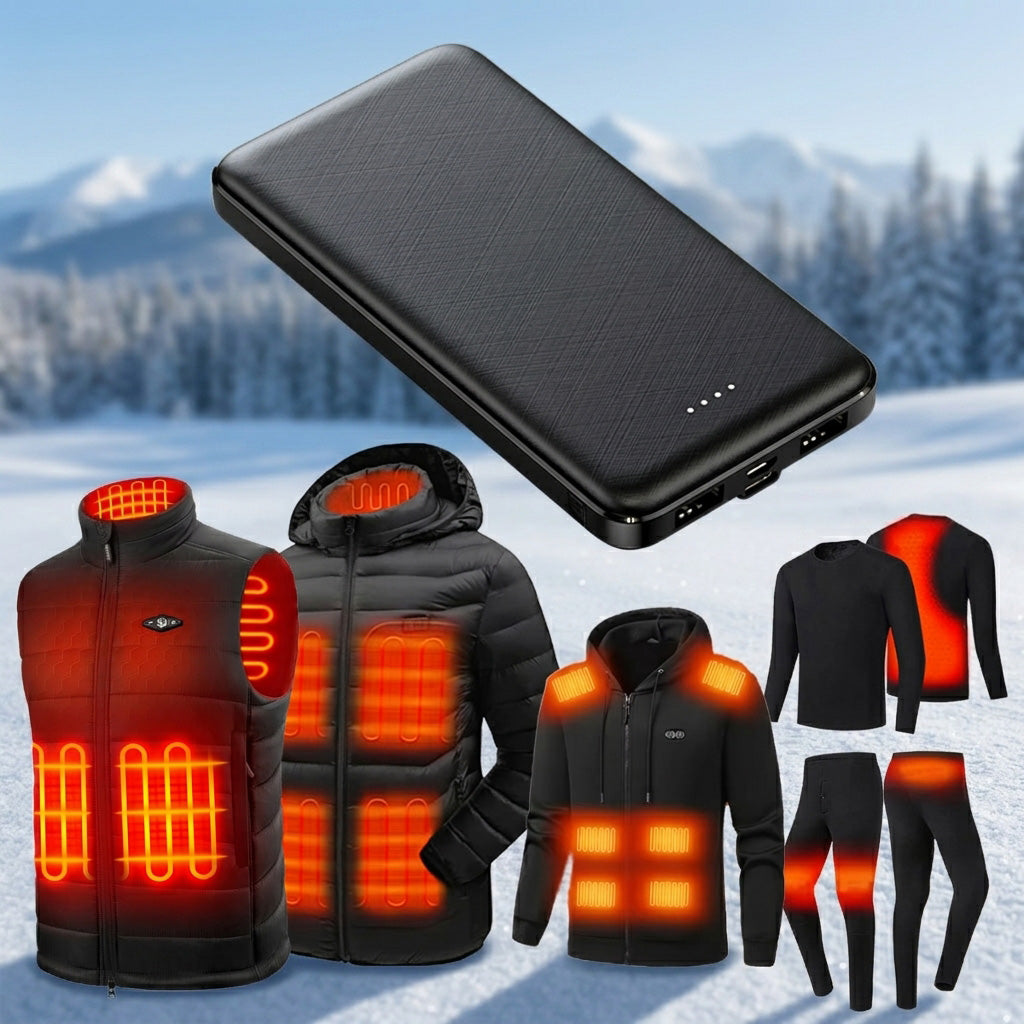
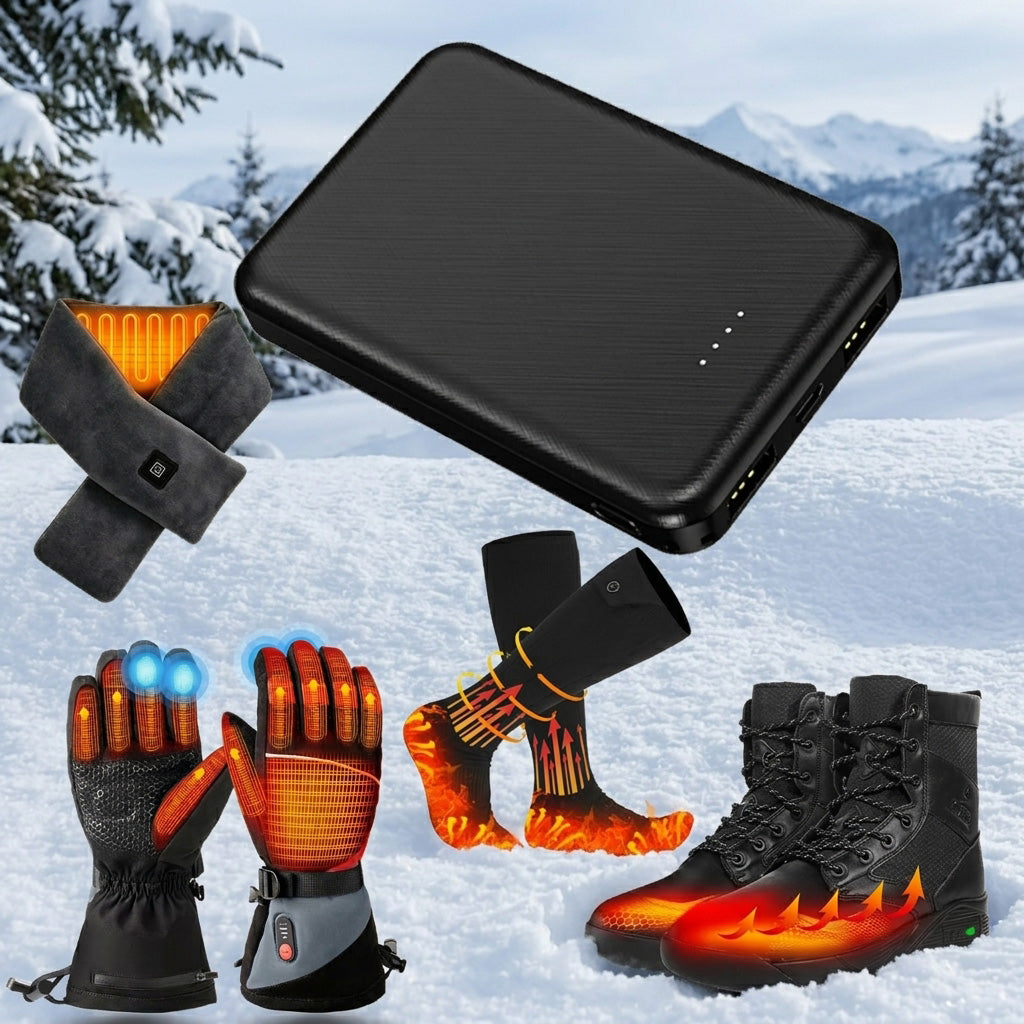
- Our full range for both men and women includes heated down jackets, softshell jackets, vests, gloves, and insoles—complete coverage for every area of your body, head to toe.
-
Versatile for every lifestyle: whether you're hitting the trails for sports and hiking, working on construction sites and outdoor jobs, navigating city living, or prioritizing health and wellness. We offer models tailored to fit your needs.
-
Intelligent layering: our heated garments work seamlessly beneath your current parka or jacket. There's no need to overhaul your entire wardrobe—simply enhance the pieces you already own.
-
Tested durability you can trust: each item undergoes rigorous real-world evaluation. We skip the hype and focus on sound textile science designed to deliver genuine warmth when you need it.
Explore our collection of thermoregulatory innovations and convert your favorite cold-weather pieces into intelligent temperature-management wear.
Conclusion
A down jacket excels in dry, cold conditions while allowing freedom of movement. A parka delivers superior protection during storms and harsh weather. A coat brings polish and flexibility for city living. Each piece serves distinct purposes—knowing the difference ensures you invest wisely and stay comfortable when winter arrives.
True transformation happens when your equipment no longer holds you back. Firoth's expertise empowers you to push further by incorporating thermoregulatory technology that delivers what materials by themselves cannot achieve. Dynamic, controlled, and customizable warmth.
Stop letting frigid temperatures limit what you can do. Discover our advanced heating solutions designed to keep you performing at your peak, no matter the season. True comfort means never having to think about the weather again.
FAQ
Can you wear a Firoth heated jacket under a parka?
Absolutely—it's among the most practical applications available. Our heated jackets are engineered to function as a mid-layer within a layering strategy. The tailoring accommodates placement beneath a parka while maintaining full mobility and comfort. By doing so, you gain the dynamic warmth of the heated jacket paired with the water-resistant capabilities of an outer shell. When selecting your size, pick your standard fit for a closer cut, or size up for additional ease and room.
What is the battery life of our heated parkas?
Firoth batteries, developed in collaboration with VoltR, deliver between 3 and 8 hours of runtime based on your chosen heat setting. Control is simple—an LED button provides access to three distinct power levels:
-
Level 1 (white): soft warmth lasting up to 8 hours — suited for daily urban wear.
-
Level 2 (blue): medium warmth lasting around 5 hours — ideal for prolonged time outdoors.
-
Level 3 (red): intense warmth lasting approximately 3 hours — engineered for severe cold or inactive use.
How do I care for my technical down jacket without damaging the insulation?
Washing a down jacket—heated or not—requires a few simple precautions:
- Start by taking out the batteries before you work with the jacket.
- Wash in a machine using the gentle cycle at no more than 30°C.
- Choose a soft detergent and skip fabric softener, as it blocks the material's breathability.
- Avoid machine drying heated versions, as high heat can harm the carbon heating elements.
- Spread the jacket flat while it dries. If you have a traditional down jacket, toss a few tennis balls in the dryer on low heat to help fluff up the filling.
Are Firoth jackets suitable for extreme temperatures?
Firoth provides versatile options designed to perform across diverse weather scenarios. Our selection of heated jackets and insulated down jackets has been rigorously tested and rated to operate effectively between 0°C and -25°C, with performance varying based on your chosen heat level and layering approach. When facing extreme cold, pairing heated base layers with a heated down jacket and a windproof shell delivers comprehensive thermal coverage and maximum comfort.
Are there heated models for construction and outdoor trades?
Absolutely. Firoth creates specialized product ranges for workers operating in cold environments: heated sleeveless vests (offering unrestricted mobility for hands-on tasks), EN388-certified heated gloves (with cut protection), and heated insoles that work seamlessly with safety footwear. Each solution is engineered to preserve grip strength and mental sharpness throughout extended outdoor shifts.
What size should you choose when layering your thermal clothing?
For an effective multi-layer system, follow these tips:
-
Base layer (heated underwear): Select your standard size for a fitted, snug feel.
-
Mid-layer (heated jacket or vest): Go with your regular size when wearing only a basic tee underneath. Choose one size larger if you're layering with a heavier sweater.
-
Outer layer (parka or coat): Ensure the zipper closes smoothly over your mid-layers. Always test the fit while wearing your complete layered outfit.
.